The Six Dimensions of Wellness: A Whole-Person Approach to Well-Being
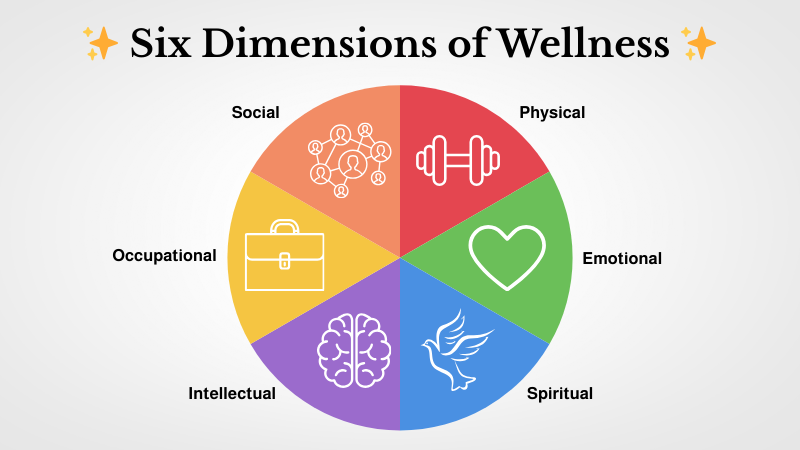
A big-picture view of how physical, emotional, social, and other areas of life work together…
The words health and wellness are often used interchangeably, but they’re not the same thing.
Understanding the difference can completely shift how you approach your habits, your mindset, and your expectations around feeling well.
Health is a state of being, often defined as the absence of disease or illness. Wellness, on the other hand, is an active, ongoing process. It’s about the daily choices we make that support a balanced, fulfilling life.
Here’s another way to look at it: Health is the goal (being well). Wellness is the journey (living well).
Health Is Measurable; Wellness Is Personal
Health is often seen as the foundation of well-being. The World Health Organization defines health as “a state of complete physical, mental, and social well-being, not merely the absence of disease or infirmity.” You can measure health with things like blood tests, screenings, diagnoses, and tracking symptoms.
Wellness, in contrast, is more personal and looks at the whole picture. It is not just about numbers or test results, but about how your life feels. Wellness includes personal growth, balance, meaning, and the habits that help you enjoy life. It covers emotional, social, and spiritual parts of life, as well as physical and mental health. Wellness also means taking an active role in your well-being.
You don’t “arrive” at wellness. You practice it.
The Six Dimensions of Wellness
The Six Dimensions of Wellness framework was developed by Bill Hettler, co-founder of the National Wellness Institute. It reminds us that true well-being isn’t built in just one area. it’s supported by multiple, interconnected parts of life.
Below is a breakdown of each dimension and its significance.
Physical Wellness
Physical wellness means moving your body regularly, eating healthy foods, taking care of illness or injury, and avoiding harmful habits like smoking, using recreational drugs, or drinking too much alcohol.
This part of wellness is not about being perfect or following strict rules. It is about caring for your body in ways that you can maintain and that feel right for you.
Ask yourself: Am I moving and eating in ways that help me feel stronger and able to handle daily life?
Emotional Wellness
Emotional wellness is about how we connect with ourselves and our feelings. It means feeling good about life, handling stress well, and finding healthy ways to cope. It also includes knowing yourself, being honest about your strengths and limits, making your own choices, and facing challenges without feeling overwhelmed.
Healthy emotional wellness supports satisfying relationships and allows space for the full range of human emotions, without judgment.
Ask yourself: Do I allow myself to feel, process, and respond to emotions in a supportive way?
Occupational Wellness
Occupational wellness is about feeling satisfied and fulfilled in your work, whether it is a job, caregiving, volunteering, or another important role. It includes building skills, having positive relationships, finding balance, and feeling like you are making a difference. Work that reflects our values and interests supports occupational wellness more than work that feels disconnected or unrewarding.
This dimension reminds us that how we spend a large portion of our time matters.
Ask yourself: Does my work fit with my values, strengths, and where I am in life right now?
Social Wellness
Social wellness is about feeling connected, having a sense of belonging, and getting support. It shows how good our relationships are and how well we can make and keep meaningful connections with others.
Strong social wellness doesn’t mean having a large circle. It means having relationships where you feel seen, supported, and valued.
Ask yourself: Do I feel connected, supported, and able to be myself with the people in my life?
Intellectual Wellness
Intellectual wellness is about being curious, learning new things, and keeping your mind active. It means growing your knowledge, building skills, and being open to new ideas, whether that is through reading, talking with others, being creative, or learning more in school.
This part of wellness helps you adapt, feel confident, and keep growing throughout your life.
Ask yourself: Am I giving myself opportunities to learn, grow, and stay mentally engaged?
Spiritual Wellness
Spiritual wellness is about finding meaning and purpose in life. It can include faith, values, feeling connected to nature, thinking deeply, or feeling part of something bigger than yourself. This part of wellness is very personal and does not have to involve religion.
Spiritual wellness can help you make decisions, stay steady during tough times, and appreciate life more deeply.
Ask yourself: What gives my life meaning, and am I making time for it?
Why Balance Matters (Not Perfection)
You don’t have to be great at all six dimensions simultaneously. Life changes, so sometimes you will need to focus more on some areas while others stay steady.
Wellness is about being aware, not about reaching a certain goal. Just noticing which part of your wellness feels strong and which needs more care is a great first step.
A Thought to Leave You With
Instead of only asking yourself, “Am I healthy?” try asking this as well: “Which dimension of wellness could use a little more support right now?”
Pick one small, realistic step instead of trying to change everything at once. Wellness grows from daily habits that fit your life right now.
When you focus on the journey instead of the finish line, wellness becomes something you live, not something you chase.